
How to Fade Acne Scars: What Actually Works for Red and Brown Marks (PIE & PIH Explained)
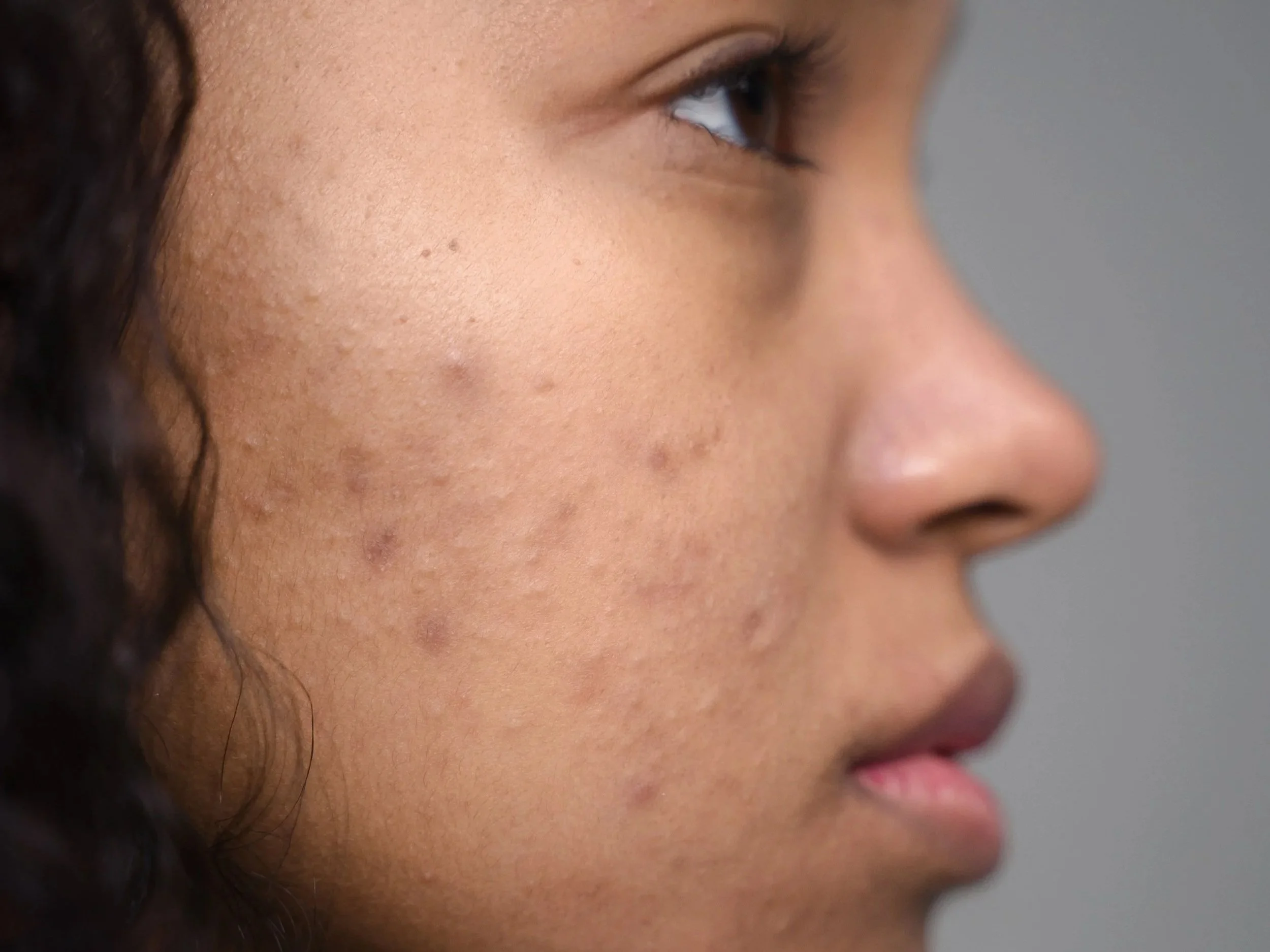
Quick answer: Most marks left behind after acne aren't permanent scars, they're post-inflammatory erythema (red marks) or post-inflammatory hyperpigmentation (brown marks) and both fade with time, barrier support and antioxidants. Protecting your skin barrier, boosting antioxidant intake and using SPF all speed up fading. True textured scarring is less common and may need professional treatment, but most marks resolve on their own.
When I had acne, I worried about the scars as much as the spots themselves. Maybe more, if I'm honest. A spot felt temporary, something that would calm down eventually. But the mark it left behind felt like proof, evidence that would sit on my skin long after the breakout had gone. I wish someone had told me, plainly and early, that they weren't permanent. So I'm telling you now.
Not All Marks Are Scars
This distinction matters more than almost anything else I can tell you. What most people call an "acne scar" is usually one of two things: post-inflammatory erythema (a red or pink mark) or post-inflammatory hyperpigmentation (a brown or dark mark). Both are part of the skin's normal healing response, and both fade. True textured scarring, the kind that leaves a dip or indent, is far less common and works differently. If what you're looking at is flat and coloured rather than textured, you're very likely looking at something temporary.
Red Marks: Post-Inflammatory Erythema (PIE)
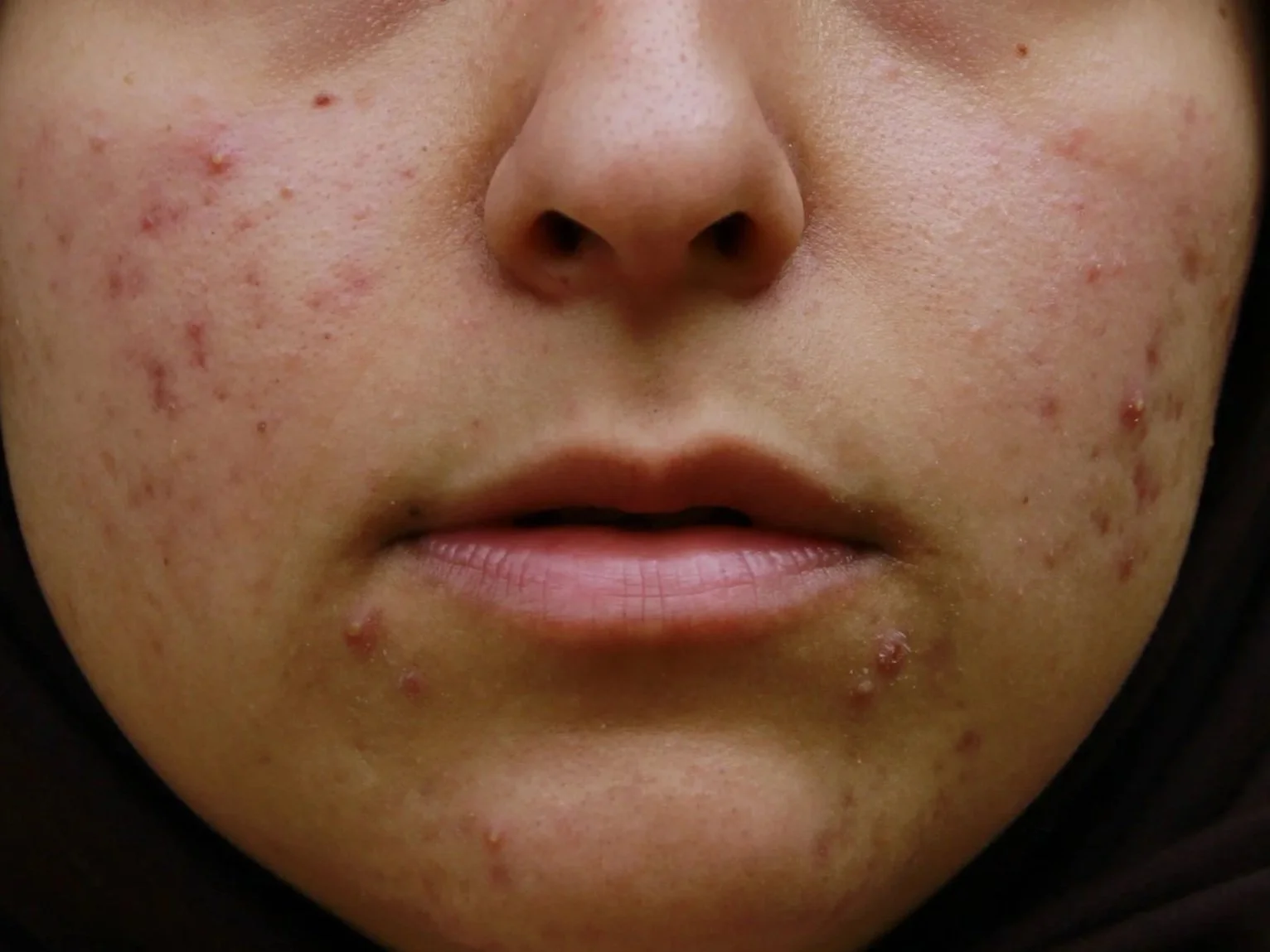
Post-inflammatory erythema (PIE)
Red acne scars, or PIE, are caused by leaky blood vessels left behind after a breakout. During healing, your body builds tiny capillaries to speed up recovery, but sometimes they hang around longer than they should, leaving that pink or red flush behind. The good news is that this healing process can be sped up, mainly by calming inflammation and supporting the skin's repair systems rather than waiting it out passively.
Brown Marks: Post-Inflammatory Hyperpigmentation (PIH)
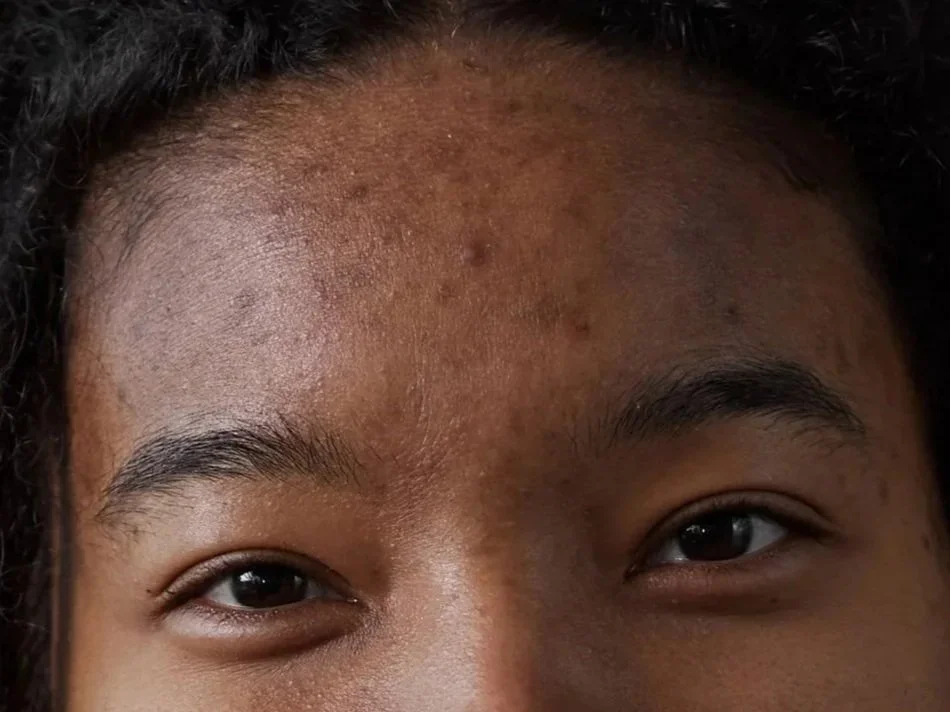
Post-inflammatory hyperpigmentation (PIH)
Brown acne scars, or PIH, happen when your skin produces extra pigment to protect itself from UV light during healing. It's a defence mechanism, not a malfunction.¹ Boosting your skin's antioxidant levels can help prevent these marks forming and speed up their fading. When your skin is stressed, whether from a weak barrier or UV exposure, it takes longer for these marks to resolve. Antioxidants are your skin's defence and recovery system combined, protecting it while accelerating the fade.
The Corneotherapy View on Scar Healing
This is where I think a lot of acne scar advice misses something important. Corneotherapy is an approach to skincare focused on repairing and protecting the stratum corneum, your skin's outermost barrier, rather than treating each concern in isolation. The principle is simple: a compromised barrier keeps skin in a low-grade state of inflammation, and inflammation is exactly what prolongs both PIE and PIH.
In practice, this means the aggressive exfoliation or harsh actives many people reach for to "fade scars faster" can actually backfire, re-triggering the inflammation that caused the mark in the first place. A corneotherapy approach favours gentle, barrier-supporting care, ceramides, lipids, non-stripping cleansers, alongside calming the skin from within. Work with your skin's healing process rather than interrupting it, and marks tend to fade faster, not slower.
A Simple Way to Boost Antioxidants: Tomato Puree
One of my favourite, most evidence-backed examples is tomato puree. It's rich in lycopene, an antioxidant that targets redness and inflammation, especially when paired with a healthy fat.
In a study, participants who mixed three tablespoons of tomato puree with 10ml of olive oil daily saw a 40% reduction in skin redness after just ten weeks of UV exposure.³ A more recent meta-analysis of 21 intervention trials confirmed the same pattern across a much larger body of evidence: tomato and lycopene intake consistently protect skin against UV-related damage.⁴ Lycopene is fat-soluble, which makes this pairing especially useful, your skin's top layer is predominantly fat-based, so fat-soluble antioxidants are particularly well-placed to support it.
Tomato puree is mostly water-based, so your body doesn't absorb much of the lycopene unless it's taken alongside fat. The olive oil helps your body absorb more of it, giving your skin a genuine antioxidant boost. It's a simple, tasty way to support the fading of existing marks and lower your risk of new ones.
Quick tip:
Stir tomato puree through a meal that already contains a fat source, a drizzle of olive oil, an oily fish, or avocado, rather than eating it alone.
When Marks Need More Than Time
For most people, patience, barrier support and antioxidants are enough, fading typically happens over weeks to a few months. But if marks are stubborn, widespread, or genuinely textured rather than flat, it's worth seeing a professional. From a corneotherapy perspective, that means looking for support that works with your barrier rather than stripping it. Gentle, non-invasive options such as LED light therapy can calm inflammation and support healing without compromising the skin's defences. Microneedling also sits comfortably within a corneotherapy approach when it's done well, it creates tiny, fast-healing channels that stimulate the skin's own collagen remodelling, rather than removing the barrier wholesale the way a peel does. Many corneotherapy-trained practitioners pair it with several weeks of barrier-repair preparation beforehand for exactly this reason.
I'd steer away from anything promising a quick fix, particularly aggressive peels or resurfacing treatments that strip the stratum corneum. After 25 years in this industry, that's one of the clearest red flags I know. Stripping the barrier might look like progress in the short term, but it tends to re-trigger the very inflammation that caused the mark, slowing things down rather than speeding them up. This isn't just a philosophical objection either, a 2024 systematic review of PIH treatments found peels had the poorest outcomes of any approach studied, with no or minimal improvement in two-thirds of cases, worse than topical treatments, laser and light-based therapies, or combination approaches.² The professionals worth seeking out are the ones who ask about your barrier health first, not the ones selling you the fastest possible result. Get in touch if you’d like a recommendation or to know more.
FAQ: Fading Acne Scars
Are acne scars permanent?
Most marks people call "acne scars" are not permanent. They're post-inflammatory erythema (red) or post-inflammatory hyperpigmentation (brown), both of which fade naturally as the skin heals. True textured, indented scarring is less common and may need professional support, but it's the exception, not the rule.
How long do red and brown acne marks take to fade?
Red marks (PIE) often start fading within several weeks once inflammation calms down. Brown marks (PIH) tend to take longer, typically a few months, and longer still without daily SPF, since UV exposure re-triggers the pigment response that caused them.
Is microneedling safe from a corneotherapy point of view?
Yes, when done well and supported by proper barrier preparation. Microneedling creates tiny, fast-healing channels that stimulate the skin's own collagen remodelling, which is different from a peel removing the stratum corneum across a wide area. Many corneotherapy-trained practitioners build several weeks of barrier-repair skincare into the lead-up to treatment.
Can diet really help fade acne scars?
Diet won't fade a mark overnight, but antioxidant-rich foods, like lycopene from tomato puree paired with a healthy fat, have clinical evidence behind them for reducing UV-related redness and supporting the skin's healing response over weeks of consistent intake.
The Takeaway
Your skin is not keeping a permanent record of every breakout you've ever had. Red and brown marks are part of the healing story, not the ending. Protect your barrier, feed your skin antioxidants, wear SPF and give it time. It will fade. I promise.
If you'd like help working out what's actually going on with your skin, and a plan that fits your specific marks, barrier and history, book a free 20-minute clarity call →. No pressure, no quick-fix sales pitch, just a chance to talk it through with someone who understands both sides of this.
¹ Markiewicz E, Karaman-Jurukovska N, Mammone T, Idowu OC. Post-inflammatory hyperpigmentation in dark skin: molecular mechanism and skincare implications. Clin Cosmet Investig Dermatol. 2022;15:2555-2565.
² Kashetsky N, Feschuk A, Pratt ME. Post-inflammatory hyperpigmentation: A systematic review of treatment outcomes. J Eur Acad Dermatol Venereol. 2024 Mar;38(3):470-479.
³ Stahl W, Heinrich U, Wiseman S, et al. Dietary tomato paste protects against ultraviolet light-induced erythema in humans. J Nutr. 2001 May;131(5):1449-51.
⁴ The effect of tomato and lycopene on clinical characteristics and molecular markers of UV-induced skin deterioration: A systematic review and meta-analysis of intervention trials. Crit Rev Food Sci Nutr. 2024 Jun;64(18):6198-6217.